
Chemist Notes
How to Brew Better Coffee at Home
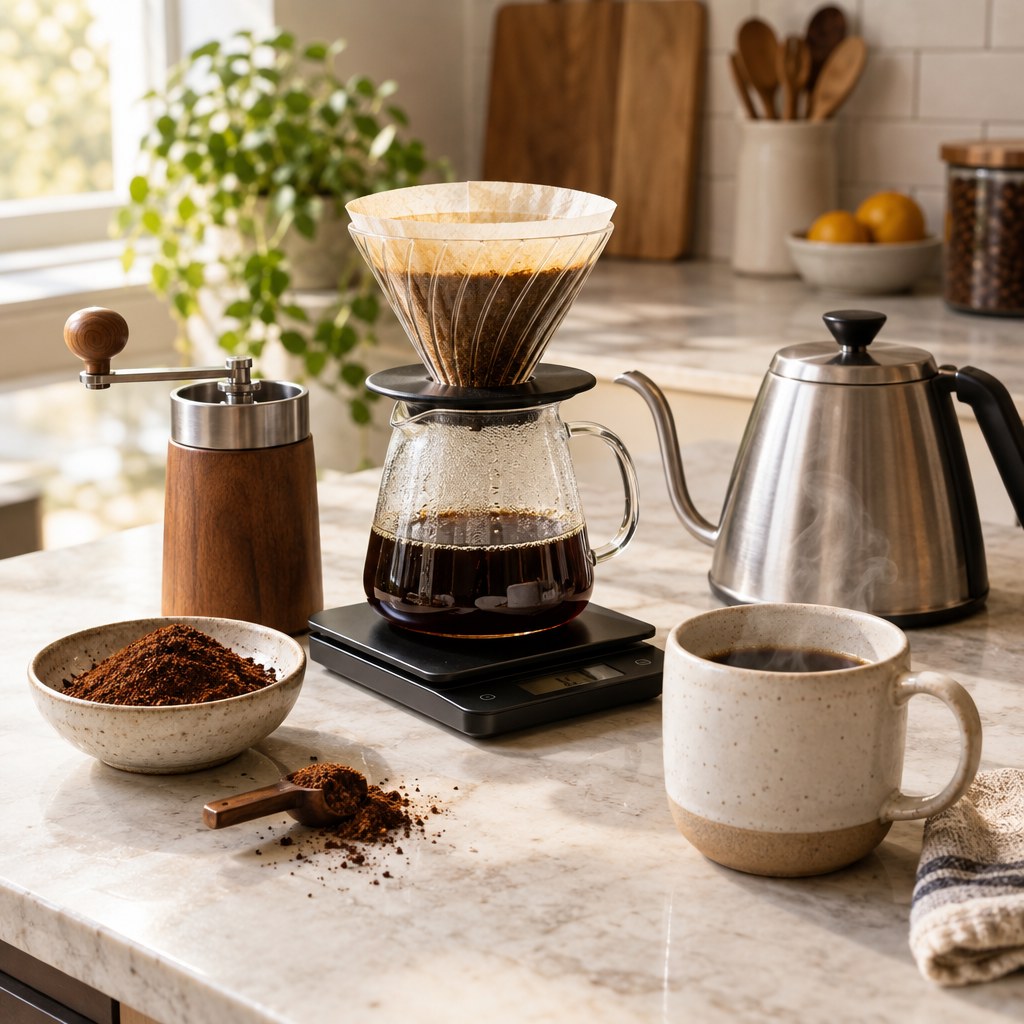
You do not need a fancy setup to brew better coffee at home. You need a few good habits.
A better cup usually comes down to four things: water, grind, ratio, and freshness. Once you understand those, coffee becomes less mysterious and much easier to adjust.
Start with better water
Let’s start with water. Coffee is mostly water, so the water you use matters. If your water tastes strongly like chlorine, metal, or minerals, your coffee may carry that flavor too. Filtered water is a simple upgrade that can make your coffee taste cleaner and more balanced.
Match the grind to the brew method
Next is grind size. Grind size affects how quickly water pulls flavor from the coffee. If the grind is too coarse for your method, your coffee may taste weak, sour, or thin. If the grind is too fine, it may taste bitter, heavy, or harsh.
Here is a simple way to think about it:
For French press, use a coarse grind.
For drip coffee, use a medium grind.
For pour-over, use medium to medium-fine.
For espresso, use fine.
The next habit is measuring. Scooping by eye works, but it can make your coffee inconsistent. Some mornings the cup is perfect. Other mornings it tastes off and you have no idea why. Measuring gives you a repeatable starting point.
A good beginner ratio is about 1 part coffee to 16 parts water. That means 20 grams of coffee to about 320 grams of water. If you do not have a scale, start with about 2 tablespoons of ground coffee for every 6 ounces of water, then adjust based on taste.
If the coffee tastes too strong, use a little less coffee or more water.
If it tastes too weak, use a little more coffee or less water.
If it tastes bitter, try a coarser grind or shorter brew time.
If it tastes sour, try a finer grind or longer brew time.
Freshness also matters. Coffee does not stay at peak flavor forever. Once coffee is roasted and opened, aroma and flavor begin to fade over time. Store your coffee in an airtight container away from heat, light, and moisture. Do not keep it next to the stove. Do not keep it in a clear jar in direct sunlight. Treat it like something worth protecting.
The last tip is simple: slow down enough to notice.
Before adding cream or sugar, taste the coffee black. Not because black coffee is “better,” but because it teaches you what is happening. Is it smooth? Bitter? Bright? Nutty? Chocolatey? Thin? Heavy? Once you notice the flavor, you can adjust the brew instead of guessing.
At The Coffee Chemist, we believe better coffee starts with curiosity. You do not have to get it perfect. You just have to pay attention, make one small change at a time, and learn what your taste buds are telling you.
That is how your everyday cup becomes your own little experiment.
Try it in your own cup: Use Coffee Flavor Notes, Explained Simply to notice what changes as you adjust your brew, then explore our coffee collection and choose a roast that fits the way you like to brew.