
Chemist Notes
Mocha Was a Port Before It Was Chocolate

Chemist Notes · Culture & History
Mocha Was a Port Before It Was Chocolate
Before mocha became a chocolate-flavored café drink, it was the name of a Yemeni port that helped carry coffee into the world.
The story inside the word
Order a mocha today and you can reasonably expect espresso, milk, and chocolate. But centuries before the word appeared on café menus, Mocha was a place.
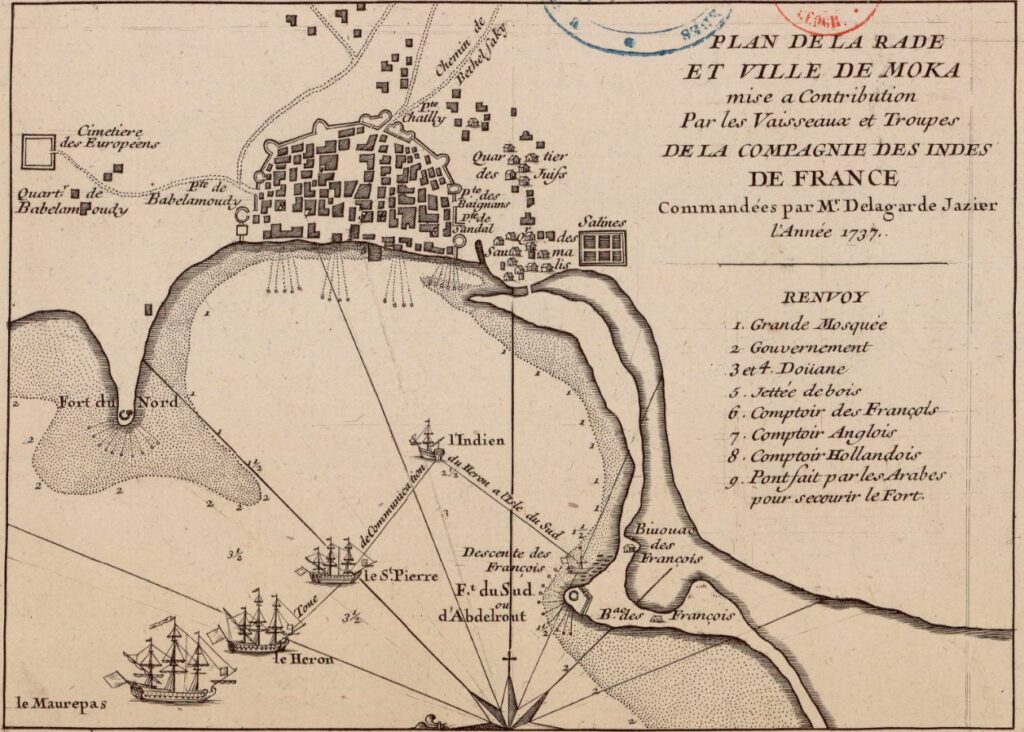
Known in Arabic as Al-Makha, Mocha is a port city on Yemen’s Red Sea coast. It once stood at the center of an international coffee trade that carried beans, brewing traditions, and a new social ritual far beyond the Arabian Peninsula.
The next time you order a mocha, remember: you are not simply naming a flavor. You are speaking a piece of coffee history.

01 · Before the flavor
There was a port.
Coffee grown in Yemen’s mountainous interior traveled toward the coast for export. The port of Mocha became one of the most important points along that journey.
For generations, ships leaving Mocha carried coffee toward cities across the Middle East, Africa, Asia, and Europe. Because so much coffee passed through the port, buyers began identifying the beans by the place from which they were shipped.
They called it Mocha coffee.
Chemist’s Note · Sample 01
The “bean” is actually a seed.
The coffee bean is the seed found inside the fruit of the coffee plant. That small botanical detail is a useful reminder that the cup begins as agriculture—shaped by plant variety, climate, soil, labor, processing, roasting, and preparation.
From plant to port
Coffee’s story began before Mocha.
The plant known as Coffea arabica is native to northeastern tropical Africa, particularly Ethiopia and South Sudan. Yemen, however, became central to coffee’s cultivation, preparation, and movement as a traded product.
Early coffee drinking is commonly associated with Yemeni Sufi communities, where the beverage helped worshippers remain alert during nighttime prayers. Over time, coffee moved beyond religious use and became part of everyday life, conversation, hospitality, commerce, and public gathering.
Mocha did not invent the coffee plant. Its historical importance came from connecting inland cultivation with maritime trade.
A product can carry the name of a port even when it was grown somewhere else nearby. Mocha was the doorway.

Language under observation
The word “mocha” kept changing.
As coffee moved between places and cultures, the name gathered new meanings.
Stage 01 · Place
Al-Makha
A port city on Yemen’s Red Sea coast, known internationally as Mocha.
Stage 02 · Trade
Mocha coffee
Coffee associated with Yemen and shipped through the famous port.
Stage 03 · Taste
Mocha character
A name linked with distinctive Yemeni coffees and their concentrated flavor profiles.
Stage 04 · Café
Chocolate mocha
The modern espresso-and-chocolate drink most people recognize today.
The flavor question
Did Mocha coffee naturally contain chocolate?
No. Coffee does not contain chocolate simply because its tasting notes include cocoa, cacao, or dark chocolate.
Coffee contains hundreds of aroma and flavor compounds. Its variety, growing environment, processing method, roast development, water, grind, and brewing method can create sensory impressions that remind us of fruit, spice, nuts, flowers, caramel, or chocolate.
Those descriptions are comparisons—not added ingredients. A coffee described as “chocolatey” may contain only coffee. A café mocha, by contrast, contains actual chocolate or cocoa.
Place
Mocha is geographic.
The word traces back to a real Yemeni port, not originally to chocolate syrup.
Taste
Notes are comparisons.
Cocoa-like tasting notes describe a sensory resemblance, not an added ingredient.
Culture
Coffee traveled with people.
Cultivation, prayer, hospitality, trade, and coffeehouse culture all shaped the cup.
Rooted in culture
The culture inside the cup
Coffee history is often told as a story of discovery, invention, and global popularity. But coffee did not travel by itself.
People cultivated it. Communities developed ways to roast, grind, prepare, and share it. Traders moved it through ports. Families and religious communities gave it meaning. Coffeehouses turned it into a social experience.
The story of Mocha reminds us that an everyday menu word can contain geography, culture, labor, faith, commerce, and memory.
It also encourages us to look beyond a product’s label. When a food or drink carries the name of a place, there is usually a deeper story waiting beneath the surface.
The name remains
A word worth remembering
Mocha is no longer the center of the world’s coffee trade, yet its name has traveled farther than many of the ships that once left its harbor.
It appears on menus, packages, desserts, candles, and paint colors around the world. The meaning has changed, but the origin remains.
Inside that familiar word is a Yemeni port, an African plant, an international trade route, and centuries of cultural exchange.
That is what happens when coffee becomes more than a beverage. It becomes a record of where we have been.
Continue the experiment
Every cup has a story.
Explore more Chemist Notes about coffee origins, brewing science, cultural traditions, and the people behind the ritual.
Brewed with Curiosity. Rooted in Culture.
Sources & image credits
- Kew Science, Plants of the World Online: Coffea arabica.
- Smithsonian Magazine: the history connecting Mocha, Yemen, and the coffee trade.
- Merriam-Webster: word history and modern definitions of “mocha.”
- Historical images via Wikimedia Commons, with licenses shown in the captions.