
Chemist Notes
Build a Better Fall Coffee: Flavor Without Losing the Brew

The direct answer: build flavor around the coffee, not over it
Better fall coffee starts with a simple principle: keep the brewed coffee recognizable. Seasonal ingredients should support the coffee’s natural sweetness, body, acidity, and aroma instead of burying them under syrup, spice, or excessive dairy. Choose a coffee with enough structure for the drink you want, brew it with a consistent ratio and grind, then add aromatics in small measured amounts. When the base tastes balanced before anything is added, cinnamon, cardamom, maple, cocoa, toasted nuts, orange peel, and warming spice can make a cup feel seasonal without turning it into a dessert beverage.
The most useful order of operations is this: select the roast and coffee profile, dial in the brew, taste it plain, then add one flavor element at a time. This approach makes troubleshooting easier. If a flavored cup tastes flat, harsh, muddy, or overly sweet, you can identify whether the problem began in the brew or in the finishing ingredient. It also helps you enjoy more of what makes coffee interesting: the fruit, chocolate, caramel, floral, nutty, or spice-like notes already present in the beans.
Fall coffee does not need to mean one familiar flavor combination. Autumn has room for toasted grain, brown sugar, baking spice, apple, pear, citrus peel, cacao, sesame, dates, honey, nuts, and savory warmth. The best choice depends on the coffee in your mug and how you brew it. A bright washed coffee might welcome orange peel and a little honey. A rounder medium roast may shine with cinnamon and steamed milk. A fuller, darker coffee can stand up to cocoa, maple, or a restrained touch of clove.
Start with a coffee that has something to say
Seasonal flavor works best when it meets a coffee with a clear identity. Before thinking about toppings or syrups, consider the cup you naturally enjoy. Do you want fruit and brightness, caramelized sweetness, deep chocolate, low-acid comfort, or a richer roast-forward finish? There is no single correct coffee for fall. The goal is to pair the coffee’s existing character with ingredients that echo it, soften an edge, or add a complementary aroma.
When browsing The Coffee Chemist coffee collection, read flavor descriptions as pairing clues rather than as guarantees that every cup will taste identical. Processing, roast development, freshness, brew method, water, and personal sensitivity all influence what reaches your palate. Still, broad profile language is useful. Notes such as cocoa, brown sugar, toasted nuts, caramel, and baking spice often suggest a natural fit for creamy or sweetened fall drinks. Citrus, stone fruit, berries, florals, tea-like texture, and lively acidity can be excellent with lighter aromatic treatments.
Light roast: vivid coffee, lighter additions
Light roasts tend to preserve more origin-driven acidity and aromatic complexity. They can taste sparkling, juicy, floral, citrusy, tea-like, or delicately sweet. Those qualities can disappear quickly beneath heavy cream, large doses of sugar, or thick sauces. Instead, use additions that lift the cup. A curl of orange zest, a little honey, a whisper of cinnamon, a slice of ginger simmered into a simple syrup, or a small amount of oat milk can make the coffee feel warmer while leaving its structure intact.
Because light roasts can be less forgiving of weak extraction, make sure the plain cup tastes sweet enough before flavoring it. A thin, sour, or salty-tasting brew will not become balanced merely because it receives maple syrup. Sweetener can conceal the problem briefly, but it cannot add the body and developed sweetness that extraction failed to create. Try a slightly finer grind, a warmer brew temperature, or a slower pour before changing the flavor plan.
Medium roast: the flexible seasonal base
Medium roasts often offer the broadest pairing range because they can carry both origin character and developed sweetness. Many have enough body for milk drinks while retaining notes that make black coffee compelling. Think of medium roast as a meeting place: caramel and chocolate can sit beside fruit, nuts can sit beside spice, and a modest amount of sweetener can feel integrated rather than dominant.
For a medium-roast fall coffee, start with one warm aromatic and one supporting texture. Cinnamon plus milk is familiar for a reason, but it can become more specific with a little orange peel or a touch of maple. Cardamom plus honey can highlight a coffee with dried-fruit character. Cocoa plus a pinch of salt can deepen a coffee that already suggests dark chocolate. Keep the supporting ingredient subtle enough that you can still identify the coffee’s own finish after swallowing.
Dark roast: use contrast, not more roastiness
Darker roasts can bring a heavier body and flavors that read as bittersweet chocolate, toasted sugar, roast, smoke, or spice. They are often capable of carrying milk and stronger seasonal ingredients, but that does not mean every dark cup needs maximum intensity. Adding very dark cocoa, burnt caramel, and a heavy spice blend to an already roasty brew can make the final drink taste ashy or blunt.
Instead, use contrast. A dark roast can benefit from creamy texture, a pinch of salt, a measured sweetness, or a bright top note such as orange peel. Maple works well when used as a sweetener rather than as the entire identity of the drink. Nutmeg and clove are powerful; treat them as accents. If the cup turns dry or smoky, reduce the spice first, then consider brewing with slightly cooler water or a coarser grind to soften overextraction.
Dial in the brew before adding seasonal flavor
A flavorful coffee drink depends on a solid base. Brewing variables determine how much coffee material dissolves into water, which compounds show up first, and whether sweetness, acidity, bitterness, and body feel balanced. Seasonal additions change perception, but they cannot reliably correct a poorly brewed cup. Build your fall recipe around a repeatable method so you can make useful adjustments instead of guessing.
For most home brewers, five variables matter most: coffee-to-water ratio, grind size, water temperature, brew time, and agitation or flow. Roast level, water composition, brewer design, and coffee freshness matter too, but the first five are the easiest places to begin. Change only one at a time. When several things move together, you may get a better cup without learning why it improved.
Ratio creates strength
More coffee relative to water creates a more concentrated cup. It can help a drink remain coffee-forward after milk or a small amount of syrup is added.
Grind controls extraction
A finer grind usually extracts faster, while a coarser grind slows extraction. Use it to correct sour, weak, bitter, or drying cups before adding flavor.
Temperature shapes clarity
Hotter water generally increases extraction. It can wake up a light roast, while slightly cooler water may make a darker roast feel smoother.
Choose a ratio that suits the finished drink
For black filter coffee, a practical starting point is a ratio around one part coffee to sixteen or seventeen parts water by weight. If you prefer a denser, more concentrated cup, move toward one to fifteen. If you want a lighter cup, move toward one to eighteen. These are starting points, not rules. Different coffees, brewers, and taste preferences can justify different choices.
When you plan to add milk, ice, or a sweetened component, brew slightly stronger than you would for a plain mug. A coffee that tastes perfect by itself may become muted after dilution. This does not mean using an extreme amount of grounds. It means anticipating the final balance. If you add two spoonfuls of warm milk and a teaspoon of maple syrup, the coffee should still register as coffee rather than as a flavored beverage with coffee somewhere in the background.
Use grind size to solve the right problem
Grind size is one of the most effective adjustment tools because it changes how quickly water reaches the coffee’s soluble material. If a cup tastes sharp, underdeveloped, sour, watery, or briefly flavorful before disappearing, try grinding a little finer. If it tastes bitter, harsh, drying, hollow, or overly roasty, try grinding a little coarser. Make small changes, especially with espresso and compact brewers, where a small shift can have an outsized effect.
Do not confuse bitterness from overextraction with the expected bitterness of a dark roast. Taste the texture and finish. Overextracted bitterness often lingers as dryness or roughness, making your mouth feel scraped or parched. A roast-forward cup may be intense but still feel rounded. When in doubt, brew a second cup with a slightly coarser grind and compare them side by side. Your palate will often make the difference clearer than a written tasting note can.
Match water temperature to roast and method
Water that is just off the boil is a reliable starting point for many pour-over and immersion brews, particularly with lighter roasts. If a light coffee feels sour or thin despite a sensible grind and ratio, somewhat hotter water may help extract more sweetness. For medium and dark roasts, slightly cooler water can sometimes reduce harshness and keep roast notes from overwhelming the cup.
Temperature is not a magic lever. A drastic reduction can leave coffee underextracted, while overly hot water can magnify unpleasant flavors in some coffees. Think in modest moves. Keep your dose, water amount, and grind stable while changing temperature. Taste the coffee before it cools completely, then again as it approaches room temperature. Many hidden flaws, especially bitterness and papery dryness, become easier to notice as the cup cools.
Aromatic fall flavors that respect the cup
Most seasonal flavor is experienced through aroma, not just sweetness. That is good news for coffee drinkers who want character without excess sugar. A small amount of a fragrant ingredient can create a strong impression while leaving room for the coffee to remain present. The key is dosing. Start below the amount that seems obvious, stir, smell, sip, and build slowly if needed.
Whole spices and fresh aromatics generally offer more control than pre-mixed seasoning blends. A cinnamon stick steeped briefly in milk behaves differently from a full spoonful of ground cinnamon stirred into coffee. Fresh citrus zest gives a bright aromatic lift without the heaviness of a strongly flavored syrup. Crushed cardamom can add complexity, while ground cardamom can become medicinal if overused. The method matters as much as the ingredient.
Cinnamon, nutmeg, and clove
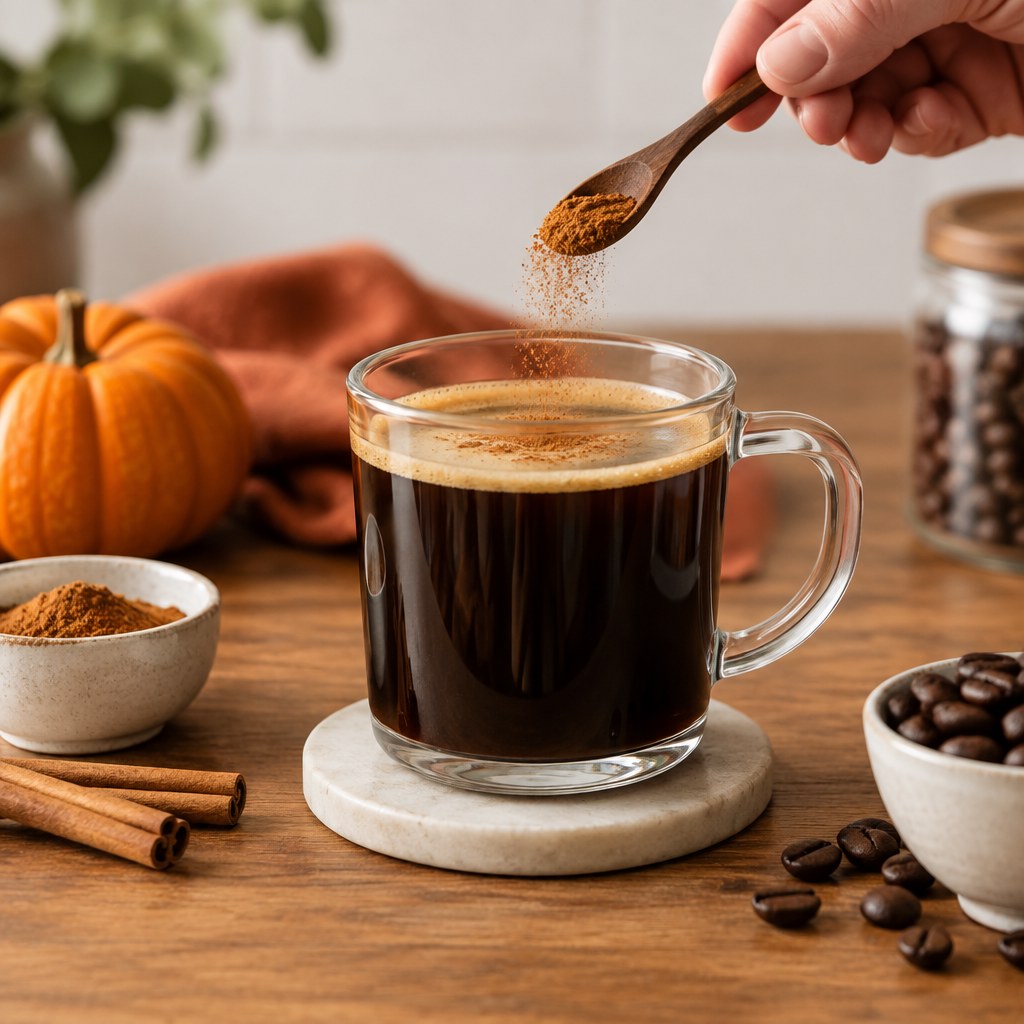
Cinnamon is often the easiest place to start because it reads as warm and sweet even when little or no sugar is added. Pair it with coffees that have chocolate, caramel, brown sugar, nut, or baked-fruit character. Add a small pinch to a milk component, steep a cinnamon stick in a warm syrup, or dust the finished drink lightly. Avoid dumping ground cinnamon directly onto a delicate black coffee, where the powder can create a gritty surface and dominate the aroma.
Nutmeg is more potent and earthier. It suits creamy coffee drinks, especially those built on medium or darker roasts. Grate it sparingly over foam or warm milk immediately before serving. Clove is stronger still. One whole clove in a small batch of syrup can be enough. Too much clove makes coffee taste medicinal, soapy, or vaguely savory. If you cannot clearly taste the coffee after adding clove, you have probably crossed the line.
Cardamom, ginger, and black pepper
Cardamom brings a floral, citrusy, resinous warmth that works beautifully with coffee, especially when the coffee already has fruit, cocoa, or dried-date qualities. Use crushed green cardamom pods to infuse milk or syrup, then strain. This produces an integrated aroma without the sandy texture of ground spice. Cardamom is also useful for people who find cinnamon too familiar and want a more distinctive seasonal cup.
Fresh ginger offers brightness and heat. It can sharpen a heavy milk drink or add life to a coffee that tastes especially chocolatey and round. Simmer thin slices briefly with water and sugar for a simple syrup, or steep ginger in hot water separately and blend a small amount into the finished coffee. Black pepper is a more unexpected choice. One tiny grind can amplify citrus or chocolate impressions, but use restraint. Pepper should make the coffee feel more alive, never spicy in a distracting way.
Cocoa, toasted nuts, and sesame
Cocoa is most successful when it deepens an existing chocolate impression instead of trying to turn weak coffee into hot chocolate. Choose unsweetened cocoa, dissolve it carefully in a small amount of hot liquid, and sweeten only after tasting. A pinch of salt can smooth its edges. Cocoa pairs especially well with coffee that already tastes nutty, caramelized, or bittersweet, but it can flatten delicate floral coffees.
Nut and seed flavors add autumnal depth without relying on the usual sweet-spice formula. Toasted almond, hazelnut, pecan, walnut, and sesame can complement coffee, yet they are easy to overdo in flavored syrups. Try using them as food pairings instead: a small sesame brittle, toasted almond biscotti, or pecan pastry alongside a clean cup can create the same seasonal impression while preserving the coffee’s aroma. If you use a nut syrup, use less than you think you need.
Maple, honey, date, and brown sugar
Sweeteners have their own flavors, so they should be selected with the coffee in mind. Maple can bring woodsy, caramelized depth. Honey can add floral or fruity lift. Date syrup can suggest dried fruit and molasses. Brown sugar can reinforce toffee and baking notes. Each can be delicious, but adding sweetness too early makes it harder to judge extraction. Brew first, taste, then sweeten in measured increments.
A useful rule is to ask what the sweetener contributes beyond sugar. If the answer is nothing, use less. If maple makes a chocolatey coffee feel rounder, it earns its place. If honey makes a bright coffee feel perfumed and balanced, it earns its place. If brown sugar only masks bitterness caused by an overly fine grind, fix the grind. The best finished drink tastes coherent, not assembled from unrelated strong flavors.
The simple side-by-side brewing experiment
One-variable experiments are the fastest way to understand how your choices affect a fall coffee. They remove the guesswork that comes from changing the coffee, the grind, the recipe, and the flavoring all at once. You do not need laboratory equipment. A scale, a timer, two similar cups, and a willingness to taste carefully are enough.
Start with a coffee you know reasonably well. Use filtered water if that is part of your regular routine. Choose one brewer and keep the method steady. A pour-over, French press, AeroPress, drip brewer, or espresso setup can all work, although the numbers and timing will differ. The important thing is to create two cups that are as similar as possible except for the one variable you are testing.
Round one: compare strength with ratio
Brew two small batches using the same coffee, grind, water temperature, method, and pouring style. In cup A, use your normal ratio. In cup B, use slightly more coffee with the same amount of water, or slightly less water with the same dose. Taste both plain. Notice which cup feels more substantial and whether the stronger cup becomes more satisfying or merely more intense.
Then add the exact same measured seasonal element to each cup: perhaps a teaspoon of maple syrup, a small splash of milk, or a few drops of cardamom syrup. The comparison will show whether your additions need a more concentrated base. Often, the stronger brew keeps its coffee identity better, particularly in milk drinks. However, if the stronger cup tastes rough or bitter, address extraction rather than adding more sweetness.
Round two: compare extraction with grind
Return to your preferred ratio. Brew two cups with all settings held steady except grind size. Make one slightly finer and one slightly coarser. Taste them without additions. The finer version may taste sweeter and fuller if your original cup was underextracted. It may also become dry or harsh if you push too far. The coarser version may taste cleaner and brighter, or it may become thin and sour.
Choose the cup that tastes most balanced plain, then repeat your seasonal flavor addition. This is important because some ingredients emphasize problems. Honey can make sharp acidity more obvious. Cocoa can exaggerate dryness. Milk can soften bitterness while making weak coffee seem bland. A good extraction gives flavor ingredients a stable platform. Your goal is not the strongest cup; it is the cup with enough sweetness, body, and clarity to carry an aromatic accent.
Round three: compare temperature
With ratio and grind settled, brew two cups at nearby temperatures. You do not need dramatic changes. The purpose is to notice how temperature affects the cup’s shape. The warmer version may taste more complete and sweeter, especially with a light roast. The slightly cooler version may feel smoother, particularly with a dark roast. Taste each one warm and after a few minutes of cooling.
Now add the same seasonal ingredient to both. A warmer, more extracted cup may hold up well to milk and maple. A cooler cup may make spice more noticeable because it has less roast intensity. Record a few words, not just whether you liked it. Terms such as bright, creamy, drying, flat, syrupy, clean, sweet, smoky, or lively can help you recognize a pattern the next time you change coffees.
Round four: compare flavor delivery
Once the brew is dialed in, compare two ways of introducing the same flavor. For example, place a small amount of cinnamon syrup directly in one cup and steep a cinnamon stick briefly in warmed milk for the other. Or compare orange zest expressed over the surface with orange-flavored syrup. Or add cardamom as an infusion in one cup and as a pinch of ground spice in another.
These pairings reveal that flavor delivery changes texture and aroma. Syrup brings sweetness and flavor together. Infusion can add aroma with less sweetness. A finishing garnish hits your nose first and can feel vivid even in small quantities. For coffee-forward drinks, aroma-first methods are often ideal. They offer a seasonal signal without requiring enough added flavor to overwhelm the brew.
Build fall coffee recipes by style, not by one fixed formula
A useful seasonal coffee recipe has three layers: a brewed coffee base, a texture or sweetness choice if desired, and an aromatic finish. Keeping the layers separate makes recipes easier to adjust. If you want more coffee presence, strengthen the base. If you want more comfort, alter the milk texture. If you want more autumn character, change the aromatic finish. You do not need to increase everything at once.
For a clean black coffee
Brew a coffee that tastes balanced on its own. Add one subtle aromatic finish: express a strip of orange peel over the cup, stir with a cinnamon stick for a few seconds, add a tiny amount of honey, or place one crushed cardamom pod beside the cup while you drink. These approaches are especially useful with pour-over or batch brew because they preserve the clarity of the coffee.
If your black coffee tastes too sharp with a citrus or spice accent, do not immediately add more sugar. First, try a slightly finer grind or a modestly warmer brew. If it tastes too heavy, reduce the sweetener and choose a brighter aroma such as orange or ginger. The seasonal quality should feel like a change in atmosphere, not a disguise.
For a milk-based coffee
Use a slightly stronger coffee base because milk reduces perceived intensity. Whether you make espresso, moka pot coffee, concentrated AeroPress coffee, or strong filter coffee, taste it before adding milk. Warm the milk gently and use an aromatic infusion when possible. A cinnamon stick, crushed cardamom, a thin strip of orange peel, or a small slice of ginger can perfume milk without requiring a large dose of syrup.
Keep sweetener independent from the spice. This allows you to decide whether the drink needs sweetness at all. A well-extracted coffee with warm milk may only need a few drops of maple or honey. If you prefer a richer drink, add cocoa that has been fully dissolved and strain any whole spices. The result should taste creamy and seasonal while still offering a distinct coffee finish.
For an iced fall coffee
Iced coffee can carry autumn flavors beautifully, but cold dulls sweetness and aroma. Brew the base with enough concentration to withstand melting ice, or use coffee ice cubes if you want to avoid dilution. Syrups mix more easily into cold drinks than dry spices, but an infused syrup can stay restrained. Try ginger-maple, cinnamon-honey, or orange-cardamom rather than a generic all-purpose spice blend.
For more aroma, garnish the finished drink with expressed citrus peel, a very light dusting of nutmeg, or a cinnamon stick used as a stirrer. Avoid piling dry ground spices directly onto ice; they often float, clump, and deliver unevenly. If using milk, shake or stir thoroughly before tasting. Cold drinks can separate in ways that make the first sip sweet and the last sip bland.
For coffee made in a French press or immersion brewer
Immersion brewing often creates a fuller texture, which makes it a natural partner for warm autumn flavors. Its body can support milk, maple, cocoa, and nutty pairings well. At the same time, the heavier mouthfeel can become muddy when you add too many ingredients. Keep your recipe simple: choose one sweetener and one aromatic, then stop.
A French press cup that tastes silty or bitter may need a coarser grind, gentler agitation, or a cleaner decant after plunging. Do not assume the problem requires more cream. Once the base tastes rounded, add a small amount of maple and a trace of cinnamon, or warm milk infused with cardamom. You will get comfort without losing the coffee’s weight and depth.
Troubleshooting: when fall flavor goes wrong
The drink tastes like syrup, not coffee
This is usually a balance problem, not a failure of the flavor itself. Reduce the flavored component first. Then strengthen the coffee base slightly, either by using a more concentrated recipe or by reducing dilution from milk and ice. If you need sweetness, choose a smaller amount of a more characterful sweetener rather than a large amount of neutral sugar. Maple, honey, and date syrup can contribute aroma at lower doses.
The coffee tastes bitter after adding spice
Check whether the brew was already bitter. If it was, adjust grind, temperature, or brew time before blaming the spice. If the plain coffee tasted fine, you may be using too much ground spice or too much clove, nutmeg, ginger, or cocoa. Try an infusion instead. Straining spices from milk or syrup gives you more control and keeps sediment from continuing to extract in the cup.
The drink tastes weak after adding milk
Milk lowers perceived coffee intensity and can obscure delicate aromas. Brew a more concentrated coffee, use less milk, or choose a coffee with a fuller body. For filter coffee, a modestly stronger ratio can help. For espresso-style drinks, consider a shorter, more concentrated extraction if your equipment and coffee allow it. Then add the aromatic component to the milk rather than adding both a large amount of milk and a large amount of syrup.
The cup tastes sour, even with sweetener
Sweetener may briefly hide sourness, but it does not fix underextraction. Try a finer grind, warmer water, a longer contact time, or more even pouring depending on your method. Light roasts especially may need a more intentional brew. Once the coffee has developed sweetness, pair it with honey, orange, ginger, or cardamom. Those ingredients can amplify lively acidity when it is balanced, but they can make underextraction feel sharper when it is not.
The flavor feels dusty or gritty
Ground spices are the usual culprit. They do not dissolve fully, especially in cooler drinks. Use whole spices for infusion, strain syrups, grate nutmeg extremely finely, or dust spices only on foam where aroma matters more than full incorporation. Cocoa should be whisked with a small amount of hot liquid before it meets the full drink. A smoother texture makes a coffee feel more deliberate and lets its finish remain clear.
FAQ: better fall coffee at home
Should I use flavored coffee beans for fall drinks?
Flavored beans can be convenient, but they give you less control over the final cup and may make it harder to taste the coffee itself. Starting with unflavored coffee lets you adjust sweetness, spice, and milk independently. It also means one bag can serve several different drink styles. If you enjoy flavored beans, brew them simply and avoid stacking several additional syrups or spice blends on top.
Can I add spices directly to coffee grounds?
You can, but it is usually less predictable than flavoring after brewing. Ground spices may clog filters, extract unevenly, or leave residue in equipment. Whole spices can also impart more flavor than expected when brewed with grounds. For cleaner control, infuse spices into milk or syrup, or use a tiny finishing amount. If you experiment with grounds, begin with a very small dose and clean your brewer carefully afterward.
What is the best coffee roast for a fall latte?
Many people enjoy medium or medium-dark roasts for fall lattes because they often have enough body and developed sweetness to remain noticeable through milk. However, a lighter roast can make an excellent latte when brewed with sufficient concentration and paired with restrained aromatics. The best choice is the coffee whose plain flavor you enjoy. Milk and spice should make that coffee more inviting, not replace it.
How can I make a seasonal coffee without much sugar?
Focus on aromatic delivery. Steep cinnamon, cardamom, ginger, or citrus peel into milk or a small amount of syrup, then use only enough sweetener to round the drink. Choose a coffee with natural sweetness, brew it well, and add texture from milk or a milk alternative if desired. A fragrant garnish, such as fresh nutmeg or expressed orange peel, can make a drink feel flavorful even when the sugar level stays low.
Why does my coffee taste different as it cools?
Temperature changes how readily aromas reach your nose and how your palate perceives sweetness, acidity, bitterness, and body. A cup that seems balanced when very hot may reveal bitterness or dryness as it cools. This is useful information. Taste your coffee at more than one temperature before deciding whether to alter the recipe. A seasonal addition that feels perfect hot may become too strong or too sweet later.
Build your next seasonal cup with intention
Choose coffee with character, dial in the brew, and let one thoughtful autumn aroma carry the mood. Explore The Coffee Chemist coffee collection, or use Find My Next Brew to narrow your next coffee choice.
Brewed with Curiosity. Rooted in Culture.
The better fall coffee summary
Make the coffee taste good before you make it seasonal. Select a roast and profile that suit your preferred drink, use a repeatable ratio, adjust grind and temperature with purpose, and taste the base plain. Then add one aromatic ingredient at a time. Infusions, fresh zest, whole spices, and measured sweeteners usually provide more control than large pours of syrup or a heavy blend of powdered spice.
Most importantly, let the coffee remain visible. A better fall cup has warmth, texture, and fragrance, but it still has a beginning, middle, and finish that belong to the brew. Run the side-by-side experiment, take a few tasting notes, and use what you learn to create a seasonal ritual that fits your own palate rather than someone else’s default recipe.