Why Fall Flavors Work So Well in Coffee
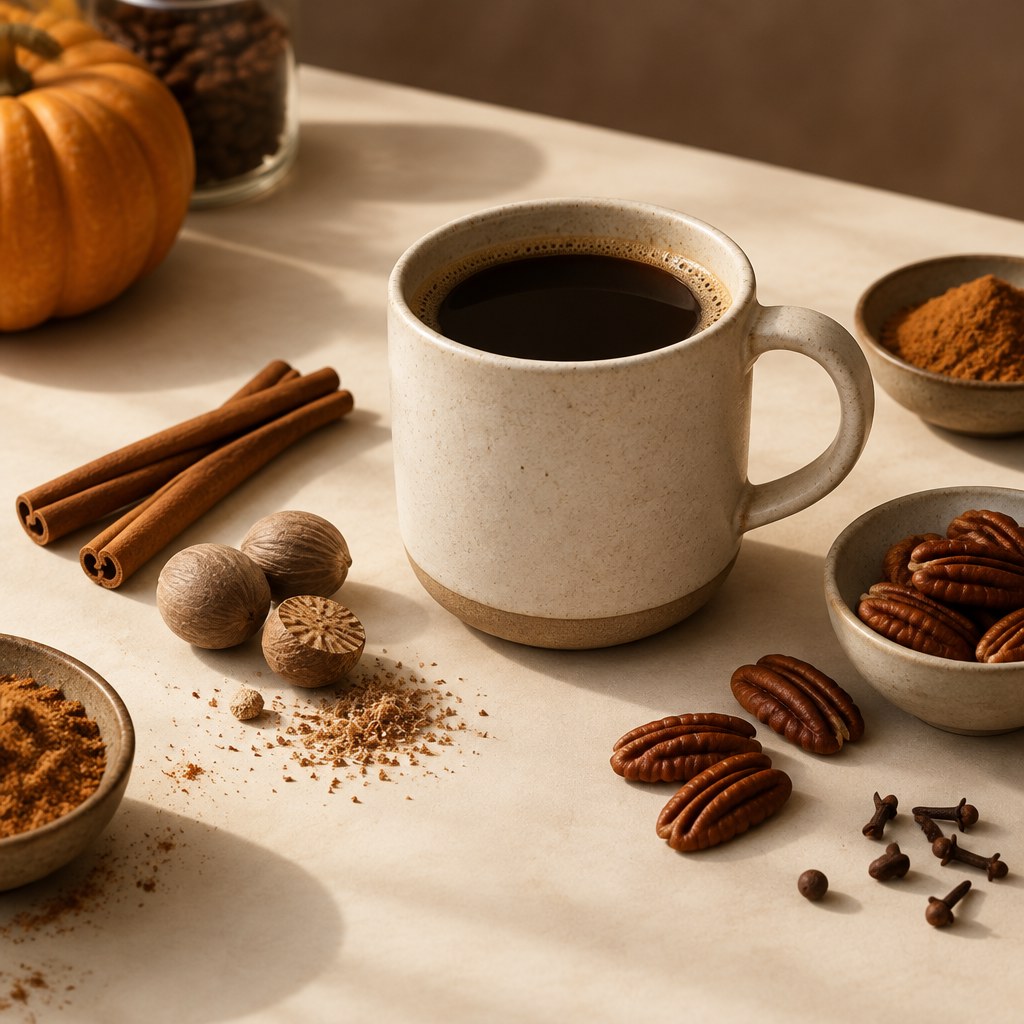
There is a reason the first hint of cooler weather sends so many of us looking for cinnamon, toasted nuts, chocolate, and pumpkin spice. Fall flavors do more than taste good in coffee. They meet coffee where it already lives: in aroma.
At The Coffee Chemist, we like to ask what is happening in the cup—not just what is on the label. And when it comes to seasonal coffee, a little chemistry helps explain a lot.
Flavor starts before the first sip
Much of what we call “flavor” is actually aroma. As hot coffee releases volatile aromatic compounds, your nose begins interpreting the experience before the coffee reaches your tongue. That is why a coffee can seem chocolatey, nutty, fruity, smoky, or spicy even when none of those ingredients were added.
Roasting creates hundreds of aromatic compounds. Some overlap naturally with aromas we associate with baking, caramelized sugar, cocoa, toasted nuts, and warm spices. Add cinnamon, vanilla, pecan, chocolate, or a pumpkin-spice profile and those aromas can feel less like strangers meeting in a mug and more like relatives arriving at the same family gathering.
Why “warm” spices feel warm
Cinnamon, clove, nutmeg, and similar spices are often described as warming. Part of that description is cultural: we encounter them repeatedly in baked goods, holiday recipes, and cool-weather drinks. Our brains become very good at connecting aroma with experience.
That means your fall cup is doing two jobs at once. The coffee supplies roasted depth and bitterness; the spice aromas add familiarity and contrast. Together they create the cozy impression we associate with the season.
Chocolate and nuts have a head start
Chocolate, hazelnut, and pecan pair especially easily with coffee because roasted coffee can already suggest cocoa and toasted-nut notes. A flavored coffee can amplify those familiar characteristics instead of covering them up.
This is also why roast preference matters. If you enjoy a rounder, more developed cup, medium and darker profiles often make an easy foundation for dessert-inspired flavors. If you prefer more brightness and origin character, you may want the seasonal flavor to play a supporting role instead.
There is no chemistry rule that says you have to like pumpkin spice
Seasonal coffee should still taste like your coffee. Maybe fall means pumpkin spice to you. Maybe it means cinnamon hazelnut, pecan pie, chocolate hazelnut, or simply a dependable medium roast on a cooler morning.
The useful question is not “What am I supposed to drink this season?” It is “What aromas and flavors do I already enjoy?” Start there.
Turn your fall cup into an experiment
Try the same coffee black, then with a small amount of milk or your usual creamer. Notice what changes. Smell the coffee before sipping. Let it cool for a few minutes and taste again. Aroma, temperature, sweetness, and texture can all change what you notice.
That is the fun of coffee: your kitchen can become a tiny sensory lab without a lab coat in sight.
Find your next brew
Ready to explore? Browse The Coffee Chemist’s seasonal and flavored coffees in the shop, or use Find My Next Brew to narrow the choices based on the way you actually like to drink coffee.
Brewed with Curiosity. Rooted in Culture.